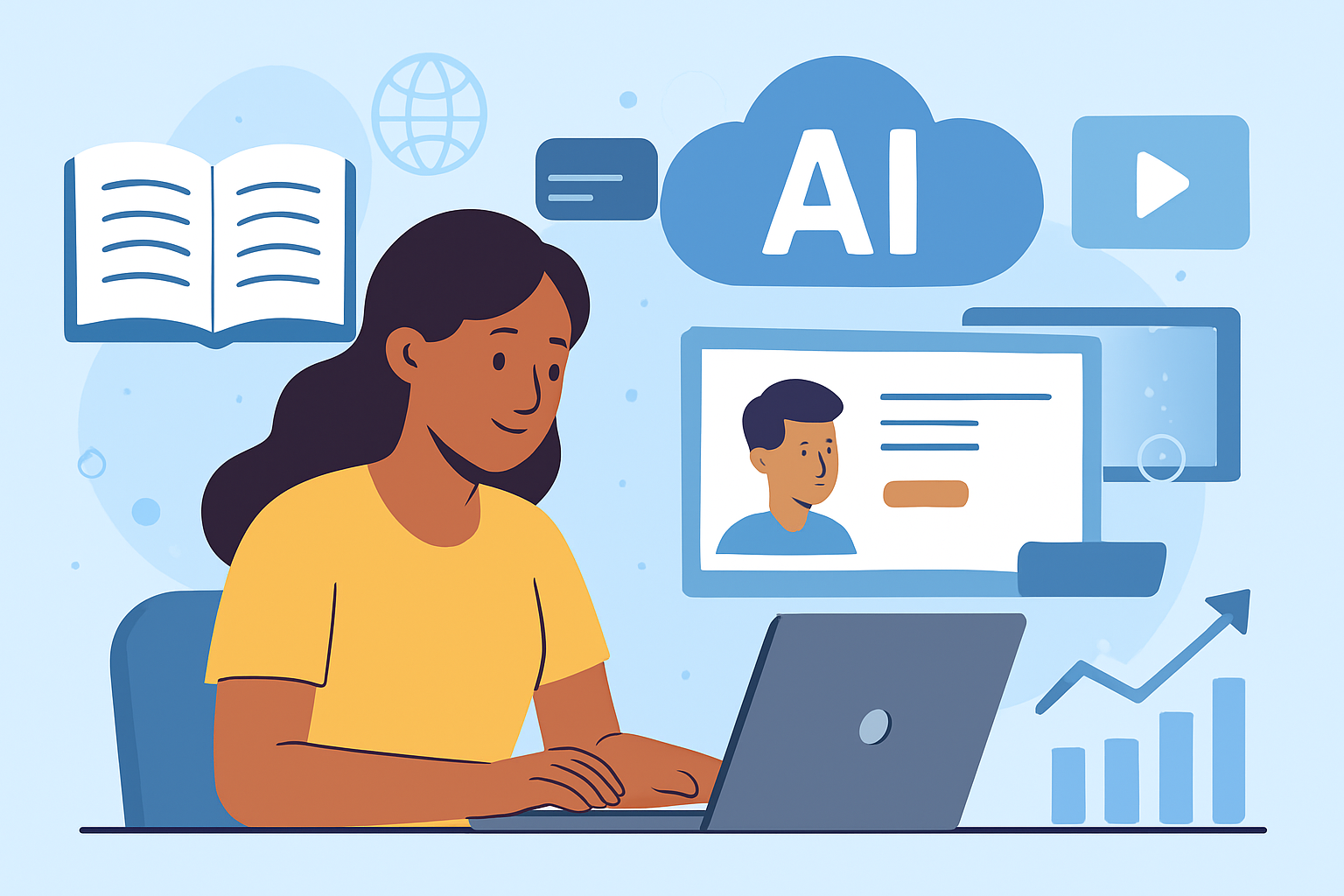
Education in 2025 stands at a pivotal moment, shaped by rapid advancements in digital tools, artificial intelligence, immersive learning environments, and global connectivity. What once seemed like futuristic concepts—such as AI tutors, virtual reality classrooms, and personalized learning algorithms—has now become an essential part of modern education systems around the world. Technology is no longer a supplement to learning; it is the driving force behind how students learn, how teachers teach, and how institutions operate.
This article explores how modern technology is transforming education in 2025, the most impactful innovations, and what the future of learning may look like.
1. Artificial Intelligence as a Personalized Learning Partner
The most influential technology reshaping education in 2025 is artificial intelligence (AI). AI has moved far beyond automation and now plays an active role in shaping learning experiences for individual students. Instead of a one-size-fits-all model, AI enables personalized education, adjusting content based on each learner’s pace, strengths, and struggles.
AI Tutors and Learning Assistants
AI-powered tutors are available to students 24/7, helping with homework, explaining difficult concepts, and offering customized practice exercises. These virtual assistants can instantly identify where a student is falling behind and adjust the level of difficulty accordingly. For example, if a student struggles with algebraic equations, the AI can deliver more foundational lessons before moving forward.
Real-Time Feedback and Assessment
AI also provides immediate feedback—something traditional classrooms often struggle to offer due to time limitations. Students receive instant corrections, performance analytics, and personalized recommendations for improvement.
Benefits of AI in Education
- Enhances individualized learning
- Reduces classroom workload for teachers
- Boosts engagement and motivation
- Helps students master subjects at their own pace
In 2025, AI is not replacing teachers—it is enhancing their ability to focus on mentorship, creativity, and emotional support.
2. Virtual and Augmented Reality Creating Immersive Classrooms
Virtual Reality (VR) and Augmented Reality (AR) have rapidly transformed from optional add-ons to mainstream educational tools.
Virtual Reality Learning Environments
VR allows students to step into immersive digital worlds where they can explore historical events, perform virtual science experiments, or visit faraway places without leaving the classroom. This level of immersion makes learning more memorable and interactive.
Imagine a history class where students take a VR tour of ancient Egypt, walking through the pyramids, observing artifacts up close, or even watching reenacted moments from history. Such experiences deepen understanding and help students visualize complex ideas.
Augmented Reality in Classrooms
AR overlays digital information onto the real world. Students can scan textbooks, lab equipment, or worksheets using mobile devices and instantly access interactive 3D models, explanations, and simulations.
For example:
- Biology students can use AR to study the human heart in 3D.
- Math students can visualize geometric shapes and angles in real space.
- Engineering students can interact with virtual prototypes before building physical models.
Why Immersive Learning Works
- Enhances engagement and retention
- Makes complex concepts easier to understand
- Accessible to students of all learning styles
By 2025, VR and AR have become integral to STEM learning, language acquisition, and vocational training.
3. The Rise of Hybrid and Remote Learning Models
The pandemic accelerated the use of online learning tools, and by 2025, hybrid education has become a new standard worldwide. Schools, universities, and training institutions combine traditional in-person classes with online platforms to offer flexibility and accessibility.
Cloud-Based Learning Platforms
Most educational systems now rely on cloud-based platforms that store assignments, lectures, resources, and grades in one place. Students can review course materials anytime, anywhere.
Live Virtual Classrooms
Real-time video lessons with interactive tools—polls, breakout rooms, whiteboards, and group chats—have made remote learning more dynamic and collaborative.
On-Demand Learning
Recorded lectures and self-paced modules allow students to control when and how they study. This flexibility supports working professionals, parents, and adult learners who balance education with daily responsibilities.
Benefits of Hybrid Learning
- Encourages independent learning
- Supports diverse schedules
- Reduces geographical limitations
- Offers higher student participation
Hybrid education in 2025 ensures that learning doesn’t stop when students leave the classroom—it continues at home, on mobile devices, and even during travel.
4. Gamification Making Learning More Enjoyable
Gamification is another major trend reshaping education. By integrating game-like elements such as points, rewards, badges, and levels, schools and universities make learning more engaging and enjoyable.
Educational Games and Simulations
Subjects that were once considered difficult or boring—like math, coding, and science—have been transformed through interactive educational games. These tools encourage problem-solving, collaboration, and critical thinking.
Motivation Through Progress Tracking
Students feel more motivated when they can track their achievements. Gamified dashboards show their progress, the skills they’ve mastered, and what they need to improve.
Competition and Collaboration
Leaderboards, team challenges, and timed missions help foster friendly competition. Students develop teamwork skills and learn to support their peers.
Gamification has proven to increase persistence, productivity, and enthusiasm, especially among younger learners.
5. The Role of Smart Classrooms and IoT Devices
In 2025, classrooms have become smarter, thanks to the Internet of Things (IoT). IoT refers to devices that can collect and exchange data, improving efficiency and communication.
Connected Devices in Education
- Smartboards that display interactive lessons
- Wearable devices tracking student concentration and health
- Smart attendance systems using facial recognition
- Automated climate and lighting control for optimal learning environments
These innovations help teachers monitor student performance in real time and tailor instruction accordingly.
Improving Classroom Management
IoT reduces administrative tasks through automated attendance, grading tools, and digital resource management. Teachers can instead focus more on teaching and student interaction.
6. Digital Textbooks and E-Libraries Expanding Resource Access
Printed textbooks are rapidly being replaced by digital alternatives in 2025. E-books are cheaper, eco-friendly, and constantly updated.
Advantages of Digital Textbooks:
- Interactive features (videos, quizzes, links)
- Lightweight and accessible on any device
- Real-time updates and corrections
- Cost-effective for students and institutions
Digital libraries further allow students to access thousands of books, research papers, and journals instantly, supporting global learning.
7. Data Analytics Enhancing Learning Outcomes
Data analytics has become essential in modern education. Schools analyze student performance data to identify trends, track progress, and create targeted interventions.
Examples of Data in Education
- Predicting which students need additional support
- Measuring which teaching methods are most effective
- Identifying common learning barriers
- Monitoring engagement in online classes
With the help of analytics, educators can make informed decisions and continuously improve teaching strategies.
8. Preparing Students for the Future Workforce
Modern technology is not just transforming how students learn—it is shaping what they learn. Schools now prepare students for a tech-driven future by incorporating skills such as:
- Coding and programming
- Cybersecurity awareness
- Data literacy
- Digital communication
- Artificial intelligence ethics
- Robotics and automation
In 2025, technology education is essential for students to remain competitive in global job markets.
Conclusion: A New Era of Learning
Technology in 2025 has fundamentally transformed education, making learning more personalized, interactive, and accessible than ever before. From AI tutors to immersive VR experiences and from smart classrooms to flexible hybrid learning models, modern technology is redefining the boundaries of what is possible in education.
As innovation continues, the future promises even more advanced tools that will empower students and educators alike. One thing is clear: technology is not just enhancing education—it is reinventing it, creating a more inclusive and dynamic learning environment for learners worldwide.